If you want to test out new control algorithms on a piece of machinery that costs billions of dollars, it’s probably a good idea to first test them out on machinery that only costs thousands of dollars first. My colleague Pedro Roque designed a robot for this purpose.
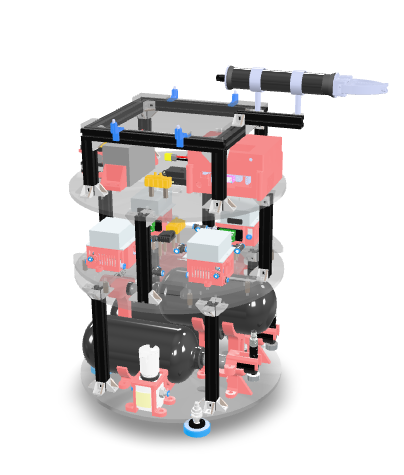
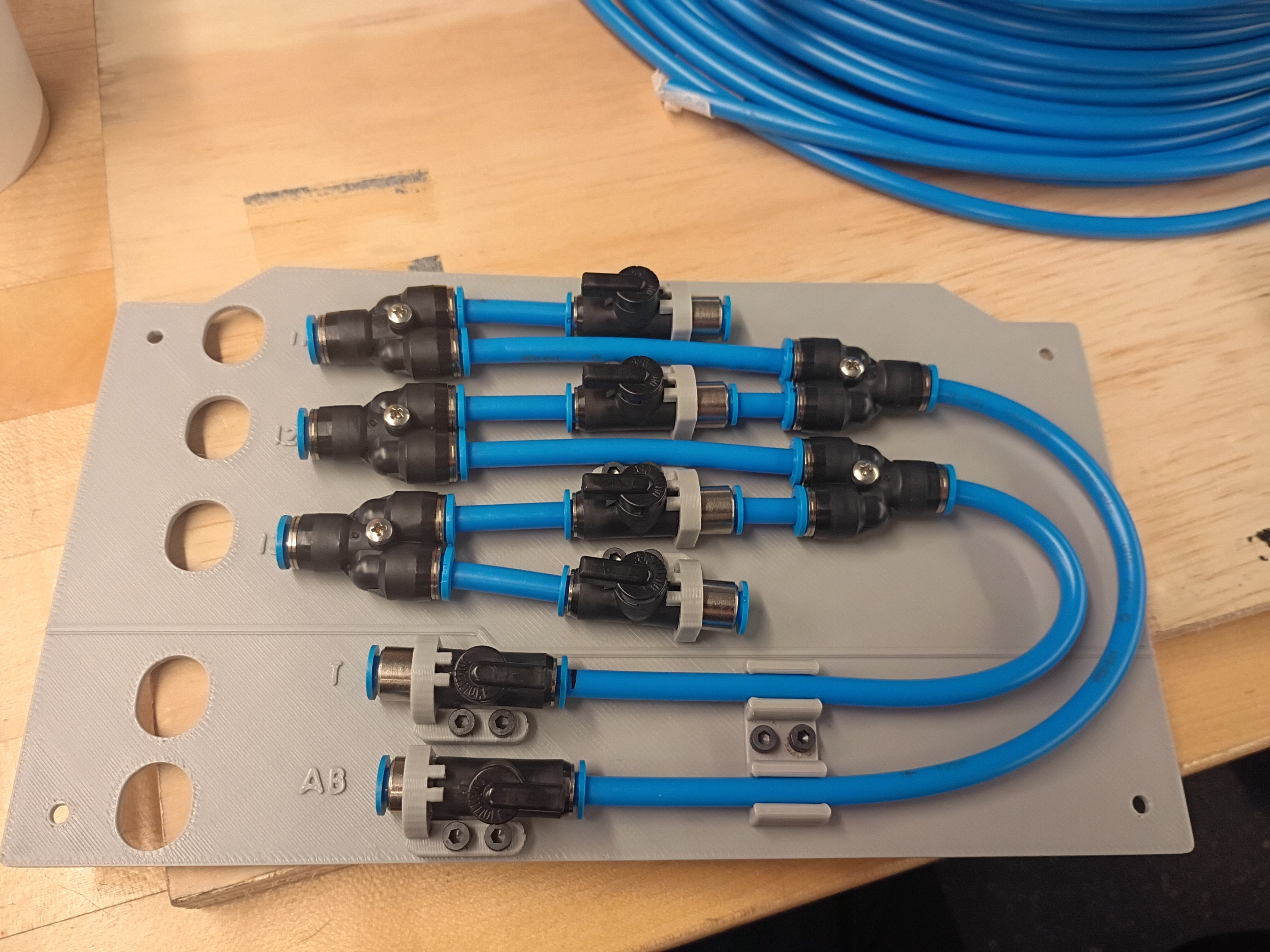
ATMOS (for Autonomy Testbed for Multi-purpose Orbiting Systems) is a free-flyer space robot. This doesn’t mean it’s a robot that goes into space. It means it’s a robot that stays on Earth, but behaves in a somewhat spacey manner. The cool thing about my friend Pedro’s design is it’s open source: everything is laid out pretty well on the website. It’s about the radius of a Roomba, but instead of rolling around, it’s like a reverse air hockey puck. It has pressurized air tanks, and a couple of special devices called air bearings, which Wikipedia says they “use a thin film of pressurized gas to provide a low friction load-bearing interface between surfaces”. So you find a big space with mega-flat floor, and then these robots float in a stable and controllable way. That’s when we get to test out new control algorithms on them. For me, hopefully that means we’ll be putting category theory on the robot.
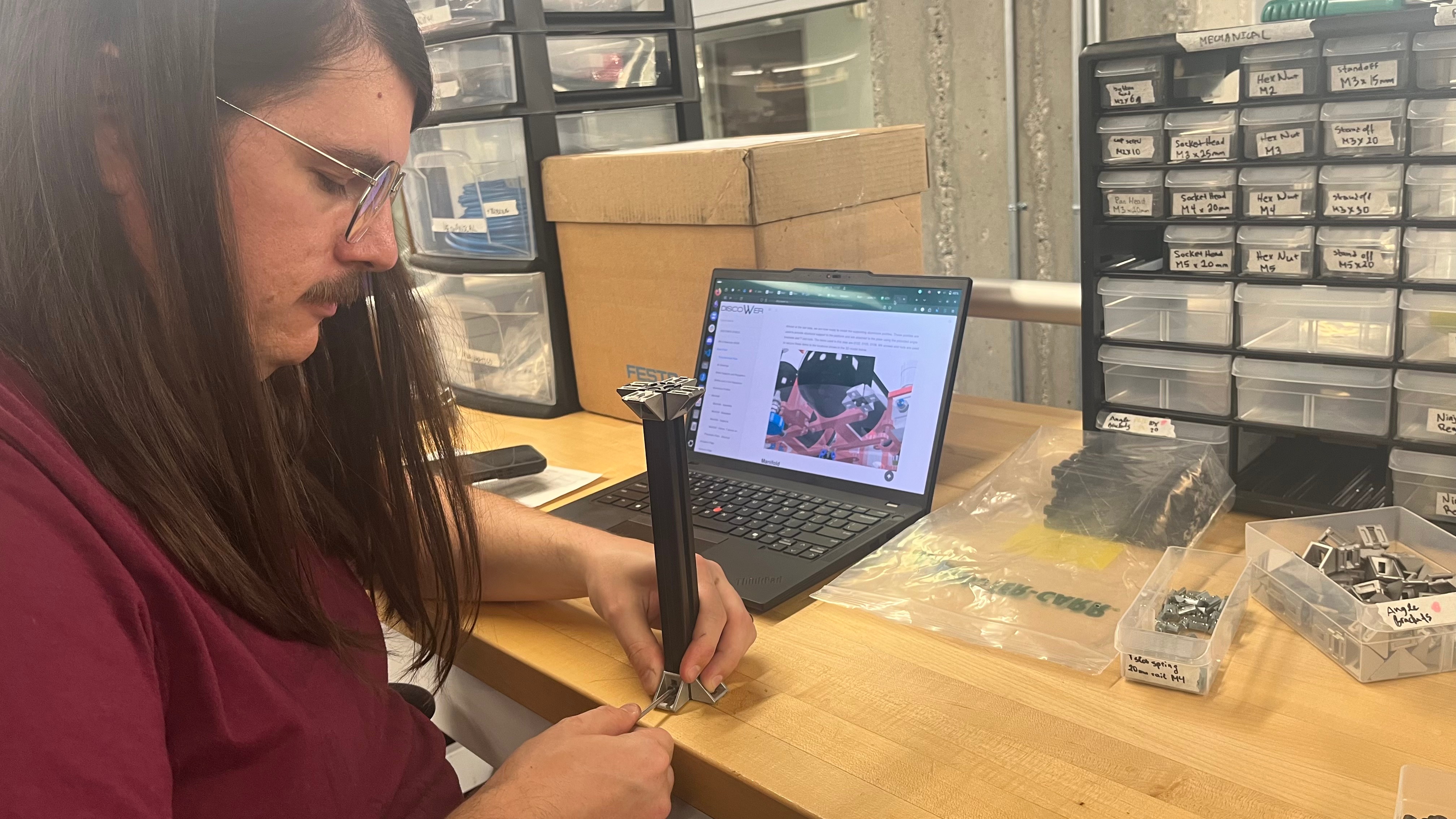
I’m not building it on my own. Another postdoc in our lab, Yana Lishkova, is leading the build. I also have two undergrads from nearby community colleges that I’m mentoring through a program called Caltech Connection. They are applied math/engineering majors, and they’re really excited about getting hands-on experience in the lab, as am I! We’re 3D printing parts and screwing them together mostly at the moment. We’ll be soldering soon. We’re also trying to get the simulation environment up and running. This is proving tricky. We also ordered a few slabs of polycarbonate that we have to cut into some pretty precise geometries. If you cut polycarbonate with lasers or CNC, it can generate toxic fumes, so you’re supposed to use waterjet. It turns out all the waterjet devices on campus are either too small or broken at the moment, so we’re figuring that out too.
 Joe Moeller